
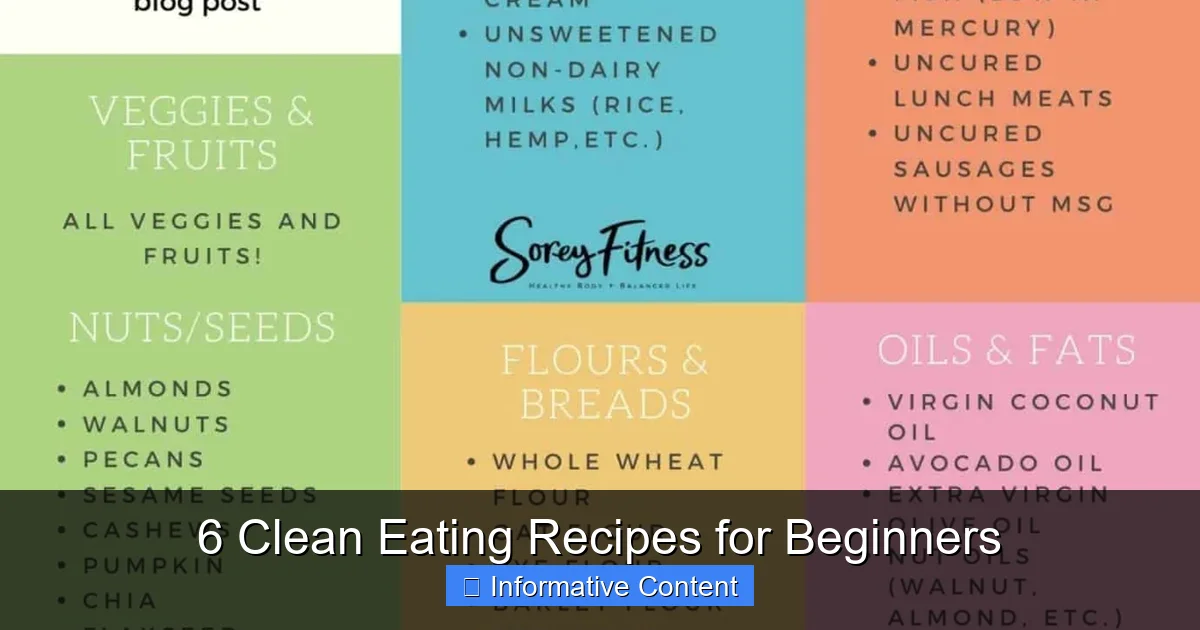
Clean eating doesn’t have to be complicated or expensive. These 6 beginner-friendly recipes focus on whole, unprocessed ingredients that are easy to find and simple to prepare. From hearty breakfasts to satisfying dinners, you’ll learn how to eat clean without sacrificing flavor or time.
Key Takeaways
- Clean eating emphasizes whole, minimally processed foods: Think fresh fruits, vegetables, lean proteins, whole grains, and healthy fats.
- You don’t need fancy ingredients or equipment: Most clean eating recipes use pantry staples and basic cooking tools.
- Meal prep makes clean eating easier: Preparing ingredients ahead of time saves time and reduces stress during busy weeks.
- Flavor comes from herbs, spices, and natural ingredients: You don’t need sugar, salt, or artificial additives to make food taste great.
- Start small and build confidence: Begin with one or two recipes per week and gradually expand your clean eating habits.
- Clean eating supports long-term health: It can improve energy, digestion, mood, and overall well-being when practiced consistently.
- These recipes are flexible: Swap ingredients based on what’s in season or what you have on hand.
Quick Answers to Common Questions
What counts as a clean eating ingredient?
Clean eating ingredients are whole, minimally processed foods like fresh fruits, vegetables, lean meats, whole grains, nuts, and seeds. Avoid items with added sugars, artificial flavors, or long ingredient lists.
Can I eat clean on a budget?
Yes! Buy seasonal produce, choose frozen fruits and vegetables, purchase grains and legumes in bulk, and plan meals to reduce waste. Clean eating can be affordable with smart shopping.
Do I need to cook every day to eat clean?
No. Meal prep, batch cooking, and no-cook options like overnight oats or salads make clean eating manageable even on busy days.
Is it okay to eat carbs on a clean eating plan?
Absolutely. Focus on complex carbs like oats, quinoa, sweet potatoes, and whole grains. These provide sustained energy and are rich in fiber and nutrients.
How long does it take to see results from clean eating?
Many people notice improved energy and digestion within a few days to a week. Long-term benefits like weight management and better skin may take a few weeks to appear.
📑 Table of Contents
What Is Clean Eating, and Why Should Beginners Try It?
Clean eating is more than just a diet—it’s a lifestyle approach that focuses on consuming foods in their most natural state. Instead of reaching for packaged snacks or frozen meals loaded with preservatives, clean eating encourages you to choose whole, nutrient-dense ingredients like fresh vegetables, fruits, lean proteins, whole grains, and healthy fats. The goal isn’t perfection, but progress. It’s about making mindful choices that support your body and energy levels.
For beginners, clean eating can feel overwhelming at first. You might wonder, “Where do I even start?” or “Is this going to be expensive?” The good news is that clean eating doesn’t require a complete kitchen overhaul or a trip to a specialty store. In fact, many clean eating recipes use ingredients you probably already have in your pantry. The key is to read labels, avoid highly processed items, and prioritize foods that are as close to their natural form as possible.
One of the biggest myths about clean eating is that it’s bland or boring. That couldn’t be further from the truth! With the right seasonings, cooking methods, and ingredient combinations, clean meals can be bursting with flavor. Think roasted sweet potatoes with cinnamon, grilled salmon with lemon and herbs, or a colorful quinoa bowl packed with veggies and a tangy vinaigrette. These dishes are not only good for you—they’re delicious too.
Benefits of Clean Eating for Beginners
When you start eating clean, your body responds in positive ways. Many people notice increased energy, better sleep, clearer skin, and improved digestion within just a few weeks. Because clean eating reduces your intake of added sugars, refined grains, and artificial ingredients, it can also help stabilize blood sugar levels and reduce cravings.
Another benefit is the mental clarity that comes from fueling your body with quality nutrients. Processed foods often contain additives and excess sodium that can leave you feeling sluggish or foggy. In contrast, whole foods provide sustained energy and support brain function.
For beginners, the simplicity of clean eating is a major advantage. You don’t need to count calories or follow strict rules. Instead, you learn to listen to your body and choose foods that make you feel good. Over time, this builds a healthier relationship with food and reduces emotional or mindless eating.
6 Clean Eating Recipes for Beginners
Visual guide about 6 Clean Eating Recipes for Beginners
Image source: juliescafebakery.com
Now that you understand the basics, let’s dive into six easy, delicious clean eating recipes perfect for beginners. Each recipe uses simple ingredients, takes under 30 minutes to prepare, and delivers big on nutrition and flavor. Whether you’re cooking for one or feeding a family, these meals are designed to fit into real life.
1. Overnight Oats with Berries and Almonds
Overnight oats are a breakfast game-changer. They’re no-cook, customizable, and ready to eat when you wake up. This recipe uses rolled oats, unsweetened almond milk, chia seeds, fresh berries, and a touch of natural sweetness from honey or maple syrup.
To make it, combine ½ cup rolled oats, ½ cup almond milk, 1 tablespoon chia seeds, and 1 teaspoon honey in a jar. Stir well, cover, and refrigerate overnight. In the morning, top with fresh blueberries, sliced strawberries, and a sprinkle of chopped almonds.
Why it’s great for beginners: It requires zero cooking, uses pantry staples, and can be prepped the night before. Plus, it’s rich in fiber, protein, and healthy fats to keep you full until lunch.
2. Grilled Chicken and Veggie Skewers
These colorful skewers are perfect for weeknight dinners or weekend grilling. You’ll need boneless chicken breast, bell peppers, zucchini, red onion, and a simple marinade of olive oil, lemon juice, garlic, salt, and pepper.
Cut the chicken and vegetables into bite-sized pieces. Thread them alternately onto skewers (soak wooden skewers in water first to prevent burning). Brush with marinade and grill for 10–12 minutes, turning once, until chicken is cooked through.
Why it’s great for beginners: It’s fast, fun to make, and packed with protein and vitamins. You can also bake these in the oven if you don’t have a grill.
3. Quinoa Power Bowl with Roasted Vegetables
This bowl is a complete meal in one dish. Start by cooking 1 cup of quinoa according to package instructions. While it simmers, chop sweet potatoes, broccoli, and carrots into small pieces. Toss with olive oil, garlic powder, and a pinch of salt, then roast at 400°F for 20–25 minutes.
Once everything is ready, assemble your bowl: quinoa at the bottom, roasted veggies on top, and a sprinkle of feta cheese and pumpkin seeds. Drizzle with a simple lemon-tahini dressing made from tahini, lemon juice, water, and a touch of maple syrup.
Why it’s great for beginners: It’s highly customizable—swap veggies based on what’s in season. Plus, quinoa is a complete protein, making this a filling, balanced meal.
4. Baked Salmon with Asparagus and Lemon
Salmon is rich in omega-3 fatty acids, which support heart and brain health. This recipe pairs it with asparagus, a nutrient-dense green vegetable that roasts beautifully.
Preheat your oven to 425°F. Place a salmon fillet and a bunch of asparagus on a baking sheet. Drizzle with olive oil, season with salt, pepper, and garlic powder, and add lemon slices on top. Bake for 12–15 minutes, or until the salmon flakes easily with a fork.
Why it’s great for beginners: It’s a one-pan meal that’s ready in under 20 minutes. The lemon adds brightness without needing heavy sauces.
5. Lentil and Vegetable Soup
This hearty soup is perfect for chilly days or meal prep. It’s made with green or brown lentils, carrots, celery, onions, garlic, diced tomatoes, and vegetable broth. Season with cumin, thyme, salt, and pepper.
Sauté the onions, carrots, and celery in a pot with olive oil for 5 minutes. Add garlic, lentils, tomatoes, broth, and spices. Simmer for 25–30 minutes until lentils are tender. Stir in a handful of spinach at the end for extra nutrients.
Why it’s great for beginners: Lentils are affordable, high in protein and fiber, and cook quickly. This soup freezes well, so you can make a big batch and enjoy it all week.
6. Banana Oat Pancakes (No Flour Needed)
Who says clean eating can’t include pancakes? These fluffy pancakes are made with just three ingredients: ripe bananas, eggs, and rolled oats. Blend 1 banana, 2 eggs, and ½ cup oats in a blender until smooth. Cook like regular pancakes on a non-stick skillet over medium heat.
Top with fresh fruit, a drizzle of pure maple syrup, or a spoonful of almond butter. You can also add cinnamon or vanilla extract for extra flavor.
Why it’s great for beginners: It’s a healthier alternative to traditional pancakes and takes only 10 minutes to make. Plus, it’s naturally sweetened—no added sugar needed.
Tips for Success with Clean Eating
Starting a clean eating journey doesn’t have to be stressful. With a few smart strategies, you can make the transition smooth and sustainable.
Start with Simple Swaps
You don’t need to overhaul your entire diet overnight. Begin by making small changes, like swapping white bread for whole grain, choosing plain yogurt over flavored, or replacing soda with sparkling water. These small wins build confidence and momentum.
Read Labels Carefully
One of the easiest ways to eat cleaner is to become a label detective. Look for ingredients you recognize and can pronounce. Avoid products with long lists of additives, artificial colors, or high-fructose corn syrup. A good rule of thumb: if you wouldn’t use it in your own kitchen, don’t eat it.
Focus on Whole Foods
Fill your shopping cart with foods that come from nature, not factories. Shop the perimeter of the grocery store where fresh produce, dairy, meat, and seafood are typically located. The inner aisles are usually packed with processed snacks and packaged goods.
Meal Prep Like a Pro
Spending 1–2 hours on the weekend prepping ingredients can save you hours during the week. Wash and chop veggies, cook grains, and portion out snacks. Having healthy options ready to go reduces the temptation to grab fast food or processed meals.
Keep It Flavorful
Clean eating doesn’t mean bland eating. Use herbs, spices, citrus, and healthy fats to add depth and excitement to your meals. Experiment with garlic, ginger, turmeric, cumin, and fresh herbs like basil and cilantro. A squeeze of lemon or lime can transform a simple dish.
Stay Hydrated
Sometimes thirst is mistaken for hunger. Drinking enough water supports digestion, energy, and overall health. Aim for at least 8 cups a day, and consider herbal teas or infused water for variety.
Be Kind to Yourself
Clean eating is about progress, not perfection. If you eat something processed or sugary, don’t beat yourself up. One meal or snack doesn’t define your journey. Focus on consistency over time, and celebrate the positive changes you’re making.
Common Mistakes Beginners Make (and How to Avoid Them)
Even with the best intentions, beginners can fall into common traps. Being aware of these pitfalls can help you stay on track.
Going Too Hard, Too Fast
Trying to eliminate all sugar, gluten, or dairy overnight can lead to burnout. Instead, make gradual changes. For example, reduce added sugar by cutting back on soda or dessert, rather than going cold turkey.
Overcomplicating Recipes
Some people think clean eating requires gourmet techniques or exotic ingredients. In reality, the simplest meals are often the cleanest. Stick to recipes with 5–7 ingredients and basic cooking methods like roasting, sautéing, or steaming.
Ignoring Hunger Cues
Restricting too much can backfire. Clean eating isn’t about deprivation—it’s about nourishment. Eat when you’re hungry and stop when you’re satisfied. Include healthy fats and protein to stay full longer.
Not Planning Ahead
Without a plan, it’s easy to default to convenience foods. Take 10 minutes each week to plan your meals and make a shopping list. This small step can prevent last-minute takeout.
Expecting Immediate Results
Health changes take time. You might not see or feel a difference after one clean meal. But over weeks and months, your body will respond. Be patient and trust the process.
How to Build a Clean Eating Pantry
Having the right ingredients on hand makes clean eating easier and more enjoyable. Here’s a starter list of pantry staples:
- Whole grains: Rolled oats, quinoa, brown rice, whole wheat pasta
- Legumes: Lentils, black beans, chickpeas (canned or dried)
- Nuts and seeds: Almonds, walnuts, chia seeds, flaxseeds, pumpkin seeds
- Healthy fats: Extra virgin olive oil, avocado oil, coconut oil
- Natural sweeteners: Pure maple syrup, raw honey, dates
- Herbs and spices: Garlic powder, onion powder, cumin, paprika, turmeric, cinnamon
- Condiments: Apple cider vinegar, Dijon mustard, low-sodium soy sauce or tamari
- Canned goods: Diced tomatoes, tomato sauce, coconut milk (unsweetened)
Keep fresh produce, eggs, Greek yogurt, and lean proteins in your fridge. With these basics, you can whip up a clean meal in minutes.
Conclusion: Your Clean Eating Journey Starts Today
Clean eating is one of the most powerful things you can do for your health—and it doesn’t have to be complicated. These six beginner-friendly recipes prove that nutritious meals can be simple, quick, and delicious. Whether you’re making overnight oats for breakfast or a hearty lentil soup for dinner, each recipe supports your body with real, wholesome ingredients.
Remember, clean eating isn’t about perfection. It’s about making better choices most of the time. Start small, stay consistent, and celebrate your progress. Over time, you’ll notice more energy, better digestion, and a stronger connection to the food you eat.
So grab your apron, pick one recipe to try this week, and take the first step toward a cleaner, healthier you. Your body will thank you.
Frequently Asked Questions
What is clean eating?
Clean eating is a way of eating that focuses on whole, unprocessed foods. It emphasizes fresh fruits, vegetables, lean proteins, whole grains, and healthy fats while avoiding added sugars, artificial ingredients, and highly processed foods.
Do I need to buy organic to eat clean?
No, organic isn’t required. While organic produce can reduce pesticide exposure, the most important thing is to eat more whole foods. If budget is a concern, prioritize organic for the “Dirty Dozen” list of produce with higher pesticide residues.
Can I eat out while following a clean eating plan?
Yes. Choose grilled proteins, steamed vegetables, and salads with olive oil and vinegar. Ask for sauces on the side and avoid fried or breaded items. Many restaurants now offer healthier options.
Is clean eating the same as a detox or cleanse?
No. Clean eating is a long-term lifestyle, not a short-term fix. Detoxes and cleanses often involve extreme restrictions and are not sustainable or necessary for most people.
What if I don’t like cooking?
Start with no-cook meals like overnight oats, salads, or smoothies. Use simple recipes with few ingredients and minimal prep. Over time, you may find cooking becomes easier and more enjoyable.
Can children follow a clean eating diet?
Yes, with balance. Focus on whole foods, limit processed snacks, and include a variety of nutrients. Avoid overly restricting sugar, but offer natural sweets like fruit or homemade treats in moderation.